

There’s something undeniably charming about an original wood entry door. The way sunlight catches the grain, the substantial feel of solid timber, the craftsmanship that speaks to another era—these doors tell the story of Chicago’s architectural heritage. From Craftsman bungalows to Georgian revivals, these portals have welcomed generations home.
But anyone who owns one of these vintage beauties knows the other side of the story.
The Reality Behind the Romance
Walk through Chicago’s historic neighborhoods, and you’ll see them: wood doors that stick in summer’s humidity, gaps that whistle with winter wind, bottoms rotted from years of snow and salt exposure, finishes that demand attention every few years. The same characteristics that give wood its beauty—its organic nature, its responsiveness to environment—also make it vulnerable.
For homeowners who value authenticity, this creates a genuine conflict. How do you honor your home’s original character while also wanting something that simply works? Something secure.
Something energy-efficient. Something you don’t have to refinish every three years.
When Wood Becomes a Burden
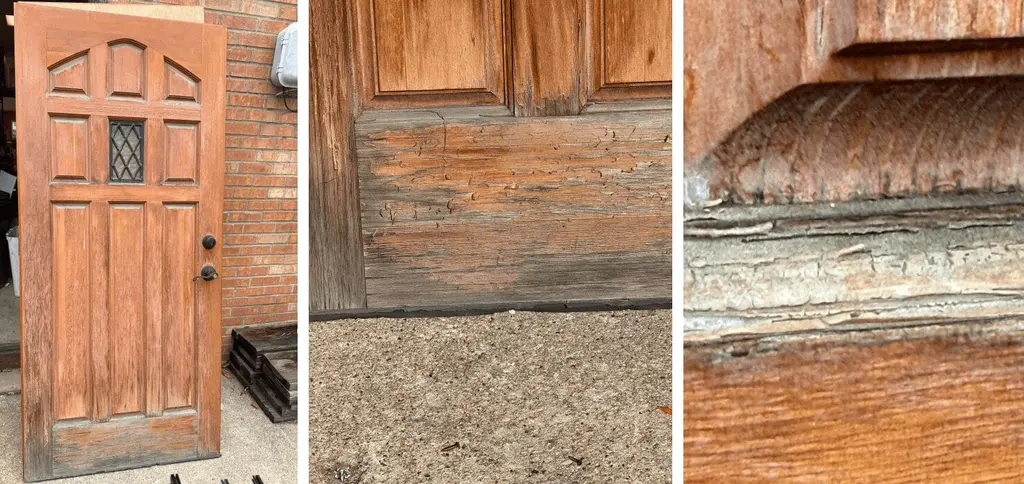
Consider the door recently replaced for a homeowner on Chicago’s North Side. The exterior told a story of battle—deep cracks running through panels where the wood grain had split apart under thermal stress, a bottom rail darkened and deteriorated from decades of moisture exposure, hardware corroded from salt spray. The close-up reveals what happens to even quality wood over time: the grain separates, creating pathways for moisture and air infiltration.
The interior side, protected from the elements, retained much of its original warmth and beauty—a testament to what drew the homeowner to this door in the first place. But the door had become more than an aesthetic concern. It stuck. Sometimes it wouldn’t open at all. The expansion and contraction from temperature swings made it unpredictable. Security became questionable.
This is the reality for countless Chicago homeowners: loving what a vintage wood door represents while living with what it actually delivers.
The Architectural Integrity Question
Today’s homeowners increasingly care about staying true to their home’s architectural period and original materials. This isn’t about being precious or purist—it’s about respecting the design integrity that makes these homes special. When you own a 1920s bungalow or a 1940s Georgian, you’re not just maintaining a structure; you’re preserving a piece of urban history.
This commitment to authenticity makes the door question particularly fraught. The original wood door is often one of the most visible character-defining features. Replace it with something obviously modern or inappropriate, and you’ve compromised the very thing you’re trying to preserve.
But continue living with a door that’s failing? That’s its own kind of compromise.
The Steel Alternative
Steel entry doors have traditionally been the practical choice—secure, energy-efficient, virtually maintenance-free. But they’ve also been the visually obvious choice, announcing their modern construction in ways that jar against historic architecture.
That’s changing.
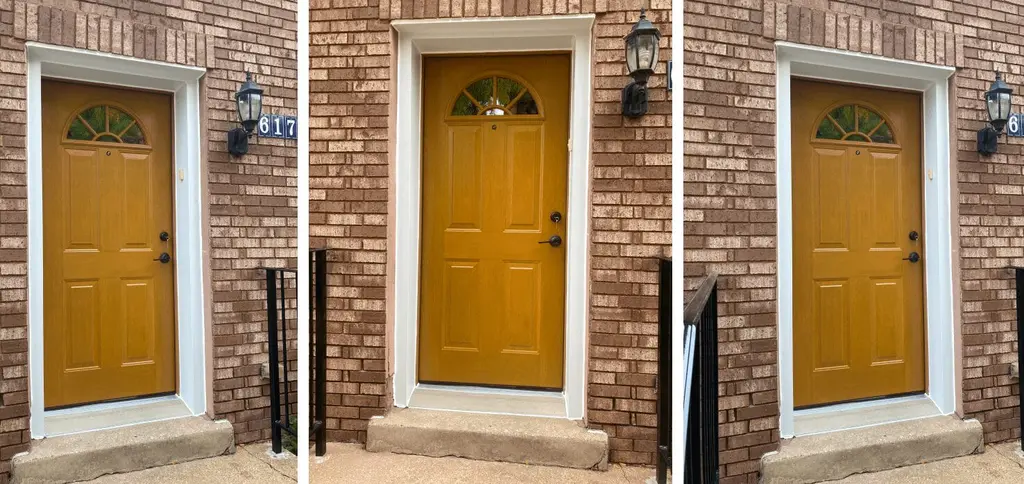
Modern manufacturing techniques now allow steel doors to carry deeply embossed wood grain textures that replicate the look of natural timber. More importantly, finishing techniques have evolved to deliver authentic wood-tone appearances that capture the warmth and depth of real wood. The result is a door that reads as wood from the curb, maintains the architectural character of the home’s period, yet delivers all the performance benefits of steel.
Performance That Honors the Past
Consider what this means in practical terms:
Security: A steel door core that can’t be kicked through, with modern multi-point locking systems that would have been impossible to retrofit into aging wood.
Energy Efficiency: Polyurethane foam cores with R-values that wooden doors simply cannot match, meaning lower heating bills and more consistent interior comfort.
Weather Resistance: No expansion, no contraction, no seasonal sticking. No bottom rail rot from snow melt. No finish degradation from UV exposure.
Maintenance: A quick wipe-down instead of sanding, stripping, and refinishing every few years.
All while maintaining the visual language of the original door—the panel configuration, the proportions, the hardware style that matches the home’s period.
The Economics of Authenticity
There’s also a financial calculation. Quality wood door restoration isn’t cheap, and it’s recurring. Strip, repair, refinish—every few years, you’re investing significant money to maintain what you have. Meanwhile, the door’s thermal performance continues to cost you in energy bills, and its security remains questionable.
A steel door with authentic wood-grain finish represents a one-time investment that eliminates ongoing maintenance costs while reducing energy consumption and increasing security. Over a 10-15 year timeframe, the economics favor replacement, especially when that replacement preserves the aesthetic you value.
Honoring Intent, Not Just Material
Perhaps the most important consideration is this: What were the original builders trying to achieve? They chose wood because it was the best available material that could deliver the appearance, security, and performance they needed. They weren’t married to wood as a material—they were trying to create beautiful, functional, durable homes.
Today, we can honor that intent by choosing materials that deliver those same qualities, even when the material itself has evolved. The goal isn’t wood for wood’s sake—it’s achieving the same visual warmth, craftsmanship, and reliability those original builders were after.
Making the Right Choice for Your Home
If you’re living with a vintage wood door that’s become more of a burden than a blessing, you’re not alone. And you’re not forced to choose between character and performance anymore.
The key is finding a solution that respects your home’s architectural integrity while delivering modern performance. That means:
- Matching the panel configuration and proportions of your original door
- Choosing hardware appropriate to your home’s period
- Selecting a finish that captures the warmth of natural wood
- Working with a company that understands historic architecture
Your home’s character doesn’t have to be held hostage by aging materials. Sometimes, the best way to preserve what you love about your home is knowing when to let technology help you honor the past while living comfortably in the present.
Recent Comments